Paulo Fonseca - Governance is the endgame
ETHCluj Meetup·Mon, Oct 27, 2025, 12:00 AM
Speaker
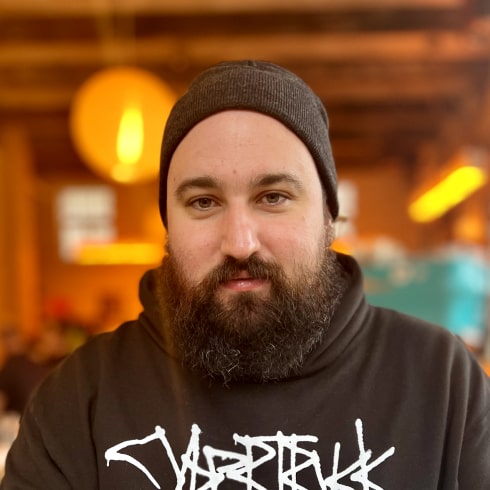
The survival and eventually thriving of our species hinges on our collective ability to be able to govern ourselves without killing each other. Governance is the endgame for humanity and the processes, rituals, tools, and systems we create to govern ourselves shape the outcomes we get. We should use DAOs to run as many governance experiments as possible, so we can learn the best ways to govern ourselves as a species. Our survival depends on it.
Transcript
hi everybody. I'm Paulo. Um, I'm going to talk about governance and it kind of suits the last panel as well. Um, so my talk is called governance is the endgame. You know, sometimes we're trying to govern ourselves and it looks like this.
Just chaos. That's how usually the Dows operate, you know, because the governance is messy, politics is messy, coordination is messy. Sometimes we get scared as a group. Collaboration is also messy. Sometimes we bite, sometimes we lick, you know, some some love and some cooperation is also messy.
We get in our we get in each other's ways all the time and we need to figure it out. And conflict is also messy. Governance is a messy, chaotic, sloppy, turbulent business. Um, but I think it is the endgame because if we don't figure out how to govern ourselves as a species, we're pretty [ __ ] Um, and so I believe that blockchains, specific public blockchains, were created not because we needed a better form of money, but we needed a better form to govern ourselves. That's why I'm in crypto.
Um, it's the end game for humanity. Just yesterday, the New York Times posted this uh piece about how AI is starting to wear down democracy. The previous panel was talking about this. It's an interactive piece where you have a world map with uh specific cases where um there was, you know, election interference with AI. If you look at the map, there's a very specific point in the map for Romania.
And the third paragraph in the article says, "In Romania, a Russian influence operation using AI attended the first round of last year's presidential elections. According to government officials, a court there nullified that result, forcing a new vote last month, bringing a new wave of fabrications. It was the first major election in which AI played a decisive role in the outcome in this country. Who voted in the presidential elections in nove in December? How did you feel when your vote was not counted?
It didn't matter. Yeah, it wasn't on the blockchain, so it's unlikely to be the last case of AI meddling with elections. Um in 1947 a distinguished gentleman said that democracy is the worst form of government except of for all the others and um we still haven't figured out a better way in the last 60 something years. Um but I think that's what we should focus on with um blockchain and with the crypto space. So I'm into Dows.
I joined the crypto space in 2016 because of DDAO and um I'm currently a delegate at Arbitum DAO and I also build tools for DAO people and um the reason why I'm a delegate and I'm participating in DAO governance is because we can experiment with democratic processes and governance processes in Dow currently. Um the guy from arbitum community tweeted this a while ago and um I said that stress testing governance systems should be our love language as a species if we want to learn new ways to govern ourselves. Um I design tools for now people um I'm building proposals.app app and I'm also a small delegate in Arbitum where uh people always say that I ask too many questions and I poke too many bears in the in the DAO but that's you know how I like to do it. Um you kind of spoiled my talk by the way.
Uh who here has joined the DAO before? Okay. Who has uh voted on an onchain DAO proposal? Okay, cool. Who has created, published, and passed the proposal in the DAO?
Okay, two crazy ones. Nice. And who has created the governance framework for a DAO? Good. Okay, so you know how hard it is to figure this out.
Um, so what is governance in this weird uh long hard to say word, right? Uh the specific definition is the structures, processes and traditions that determine how power is exercised, stakeholders have this their say, decisions are made and decision makers are accountable. But if you look at this from a more meta zoomed out perspective, it's all about how we make decisions and specifically how we make decisions as a group, right? Um so the way through which we make decisions is actually very specific thing that we should pay very much attention to and set up in our groups. The thing is that when we are in a group and we've all experienced this, you know, a group of friends trying to decide where to go for dinner for choosing a restaurant and someone wants pizza, someone else wants something else, right?
It's chaos even in that smile small microcosms. Um so whenever there's a group of people, everybody's trying to uh push for their own um you know agenda, tastes, preferences and it's very hard to coordinate and to sync everybody to make the decision together. But the thing is that even within a single individual we also have this struggle within ourselves to try to figure out you know should I follow this or should I follow this in most decisions in our life and this is also a struggle. So now when you compound the individual struggle of making decisions and the group struggle of make of making decisions it will be just a very big mess. So you can see that there's a reason why we haven't figured out how to govern ourselves properly yet.
It's because we individually are a mess and so in a group it compounds and it's a mess squared or even more than squared. So honestly I think that the take that you should have is that governance will always be messy. There's not never going to be a silver bullet that can solve uh governance and we should treat it as a wicked problem as a problem that uh we can maybe manage a bit a bit better. Usually nowadays in Dows um if you want to figure out wait I went too fast. Uh usually in Dows if you want to figure out what happened with the DA proposal you have to go through a bunch of tools.
The video is not playing but don't worry. You have to go through a bunch of tools and you have to figure out information in a bunch of places um to um understand what happened with a specific proposal and everything is uh scattered all over the place and it's a mess. So what should we do about it? We should um build better tools basically. That's my take at least.
Um and we should build better products. We should build better businesses. We should build better organizations, communities, networks, apps. And uh I've been building an app uh called proposal.app that uh aggregates all the information about uh Dow proposals in the same place so that people that need to decide and vote can go to a single page and see all the comments, all the votes, all the conversation about the specific proposal and um um can basically decide for themselves how they should vote.
So you can browse um this is most this is uh exclusively for arbitr. So you can go to a proposal, you can see the text of the proposal, you can see the several versions of the proposal, you can see the differences on the versions, why people edited some places and added and deleted some parts. Sometimes there's very little, you know, uh differences in like the amount that people uh want to pay themselves and it's interesting to see the difference of the number. Um you can see what everybody talked about this proposal, all the comments um also uh filtered by voting power and um the votes of everybody else. And you can also um see the results for the different types of voting that each proposal goes through either offchain voting or onchain voting or several of chains and so on.
Um, and so one small little way to make this better, make this mess of governance better is to build tools that, you know, improve the process a little bit. Um, and that's what we're trying to do with um, proposal.app. One specific thing that we have is that we show uh, deleted posts. So on the forum, usually whenever a post is deleted, it disappears forever.
we uh are at least showing that there was a discussion and at this point in the discussion a post was deleted either because it was censored by the forum admins or because the author decided to delete it. And in this particular proposal that I'm showing in the screen there was a big debate about this because it's a $200 million fund that was funded and hasn't produced that much of value yet and people were trying to cancel it. Um and so the discussion was maybe censored. um and also bringing these tools to the platforms that people already use. So usually most have a forum where people discuss on the forum but the discussion on the forum is segregated and it only happens on the forum.
Um and um we're also trying to bring more information and more context about uh DAO proposals and DAO um votes on the forum itself where we would show each comment with the voting power as well so that we can see that bigger delegates maybe are saying something with more weight behind their words than smaller delegates as well. It's going too fast. We did a little manifesto a while ago and if you remember the situation in Romania and how you felt when your vote was not respected, I think it's important to understand that when human beings express their will through a vote, there is a very important voice that should be honored and should be protected. And public blockchains are the tool that we invented as a species to protect that voice. And the vote is sacred and should be treated as sacred.
And the proposal is divine because when you try to propose something and improve something, you should treat that as you know your divine goal. So we should build apps, better apps. We should fund better apps and we should support better apps as well. And um you've probably seen the logos zin that's out there uh where in a certain place it has this quote. We are in crypto or we should be in crypto to create a better system.
And I think it's a good reminder to um to think about that a network of builders that are building stuff and are unstoppable in building stuff beats a nation of bureaucrats. So that's it. Thank you. Vitalic. So there there's one question.
Uh I'll read it out loud, but please think about questions and I'll walk around with the mic. Give it the opportunity to
Yeah, I can answer that one.
Yeah. Well, um first of all, Vitalik is talking a lot of [ __ ] about Dows recently and he has not participated in many Dows, which pisses me off because he should be in the forum commenting as well. Um but uh he he is right. So he said that we should burn Dows to the ground and start over a few weeks ago. And the current state in Dow land is a bit um it's bad.
So yeah, we should we should we should start over. Um one way that we could start over is including um AI governance and there's a few experiments in that regard. Um in arbitrum dao there's an experiment called event horizon where they're uh trying out creating so I'm a I'm a delegate at arbitram dao they are trying out to create a agent that is the paulo funka agent that would vote on proposals and comment on proposals as I would do from my track record in history uh that's going to be interesting um and um there's also other experiments in AI governance in um near and also in some other in some other dows I think um we need to design this very carefully. There's a very serious risk of this running off track. But um I think it is a not a technical problem but more of um um a design problem.
Uh usually uh we cannot uh let AI decide stuff because you know there's no accountability for that decision. We as humans only respect when other humans decide stuff because if that decision is wrong, we can point out who was the, you know, [ __ ] that ruined it, right? And with AI, we cannot do that. So, we still need to to um keep the accountability aspect of decision- making. So a human still has to do the final decision but there's a bunch of um landscape where AI can use can help us to make decisions uh in an easier way or in a more um comprehensive way.
One of the one of the experiments also that's going on that I would like to shout out is something that um an an organization a nonprofit actually called the society library is doing where they are mapping out uh debates about issues and they scrape the internet for content and they basically create this tree of arguments pro and against a certain issue. Uh the best example that they have was about the nuclear power plant in California if it should close or it should remain open and there's like 8,000 arguments pro and against and all the evidence is linked. So you can see um that debate map and figure out for yourself what how you should decide if you should vote for it to remain open or for it to close and they're automating that process with AI. So that's also a good cool experiment.
Thank you FRA. Oh, there's another question. Would you like me to read it? Oh, you can answer it.
Can Dows really scale to replace nation state governance or do you see them more as complimentary systems? Um, uh, there are people creating Dows for things that they should not create a Dow for. Okay, that's the first issue. uh but um more and more I think we're getting to a point in the real the real world governance where we are not trusting the institutions that govern us and so we should create something else. I'm not sure if it's going to be a DAO and I'm not sure if it's going to be nation state size but there's a bunch of experiments in network states and so on where um they will be governed as Dows and with the processes traditions and tools that Dows are now prototyping and um experimenting with and um I do think that we if we look at Dows as the test bed for democracy as in we can actually test how to govern ourselves and using um Dow technology to do it and using you know the stakes of whatever is at stake in the particular DAO uh we can learn how to govern ourselves in bigger and bigger scales and make that um test bed bigger and bigger but I also don't I'm not sure if we want um you know nationwide um sized Dows or you know EUwide or worldwide Dows I think It's not an efficient form of government.
I think a a better form of governance is more local and more customizable to people that are um value aligned to particular things. And maybe it's not going to be bound by territory. Maybe it's going to be bound by values and and um and principles more than anything else.
We have a question.
There's another one there. here. Thank you. So, most most da especially in in our space were um were built because they're based on um Eleanor Estrom's theories, right, around social ecological systems. She talks a lot about the tragedy of the commons.
Um what's your solution to resolve the tragedy of the commons? And yes, I do have three more Z if you guys want to read it.
All right. Yeah. Yeah. You know, a friend of mine that uh is into D governance as well, every time he hears the expression tragedy of the commons, he gets really pissed off because the ethmology of that expression is really uh really bad. I encourage everybody to to Google where that um expression came from and it's not it's not nice at all.
Um but there's a a coral to to it which is the um the tyranny of structural structuralness meaning if you have a group of people trying to govern themselves without structure uh things will go bad which also there's an opposite theory to that which is the tyranny of tyranny right there's a reason why we are trying to invent new forms of government of government of governing ourselves and it's because somehow some of us feel that the current governance that we are subject to is uh tyrannic. And so um the argument of the tragedy of the commons and the the argument of the structural tyranny of structurlessness is usually used to justify centralizing power also in Dows. Um I do think that most Dows are not well structured and are not wellrun and are not efficient. But uh also we should use the DAO um technology and stack for very few things than what we're currently using. Most of the DS that we have today were created because the companies that launched them wanted some, you know, regulatory, legal, um, arbitrage to not go to jail when they launched a token.
And, uh, we're now seeing since Trump is in power that those teams don't feel like they need to, you know, be uh, so decentralized and they are coming back and clawing back control of the Dows and centralizing the Dows. And so um maybe they shouldn't have been Dows in the first place, right? So there's in my opinion there's very few things that should be governed as a DAO. The current landscape of Dows that we have is very um it was created for the wrong reasons, let's say. But um uh we should design that we should be able to design Dows in a way that we won't fall into the um the tragedy of the commons mindset.
Yeah. One more one more question. What do you think is the biggest mistake Dows make when they try to govern better? Um mixing financial incentives with with governance. So um yeah, maybe I can tell a story from last week.
Um so I'm a delegate in arbitrum dao which means that uh I uh I get paid for following proposals giving fe feedback on proposals and uh voting on proposals and every month I get paid according to my performance as judged by a committee that was hired to literally go through every forum comment and rate the quality of every forum comment of every delegate. And so every month I get a score of my delegate activity and I get paid accordingly to that. So I'm being financially incentivized to um you know participate in the governance. I did a comment last month where I criticized someone else in the DAO and uh that comment was deemed um a a violation of the code of conduct which it wasn't. Okay.
But the people that are managing that, they decided that it was which means that um literally because they decided that my comment was too harsh or too critical of this other entity that's participating in the DAO, I earned $1,000 less last month than what I should have. And it feels really dystopian to figure out that my salary of being a Dow delegate is dependent on someone feeling that what I said was too critical or too harsh. So right now in the house uh mixing financial incentives with uh people are trying to govern the DAO is a very tricky situation and all those are trying to figure out how they should incentivize delegates and the systems and the process that we're coming up with are really um crazy and my stance my my particular personal stance is I want to [ __ ] with this until we learn and we get better systems and maybe that's why I do comments that are a bit controversial and and try to improve uh the systems and maybe that's why there's going to be a proposal to change this program uh in a different way.
Thank you for that. We have time for one more question. Anyone else? Does it make sense to decentralize governance when enforcing bodies remain centralized?
What? Sorry.
Does it make sense to decentralize governance on a grander scale when the enforcing bodies be that the police, the army remain centralized? Yeah, we should centralize that as well. How would you go about it? We should create our own private drone armies and AIdriven guns. And what do you want me to say?
Yeah, I mean we should use technology to also decentralize that. That's it.
Automatic transcript — names and jargon may be misspelled.